
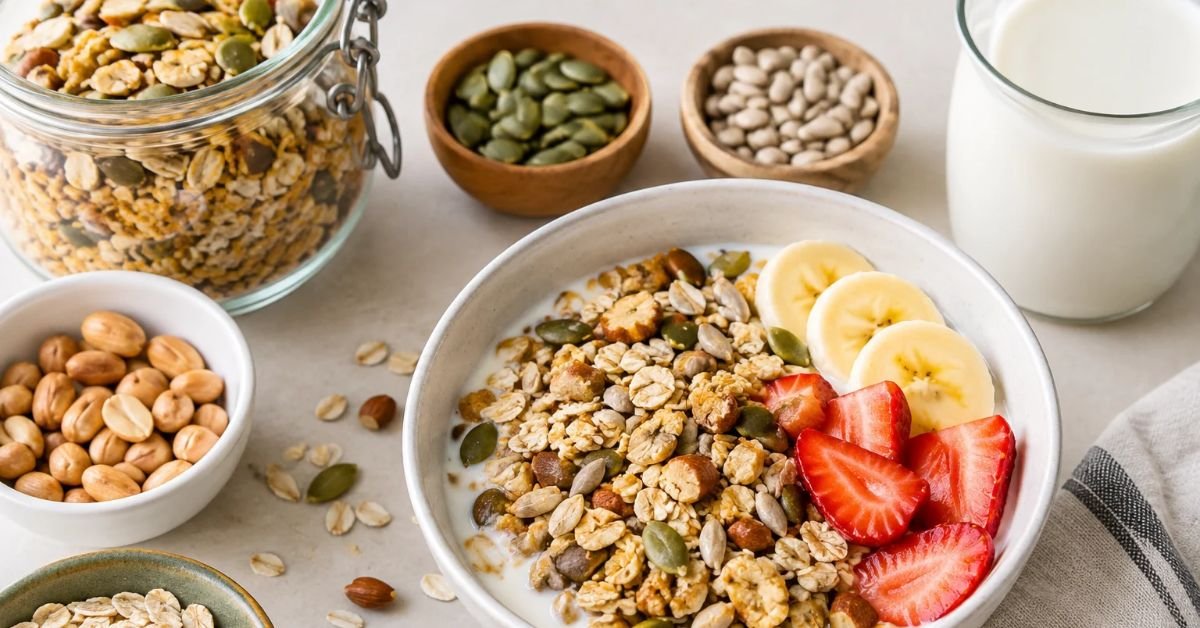

If you walk through the breakfast cereal aisle at almost any American or British supermarket, and you’ll find products promising whole grains, extra fibre, natural ingredients, and a healthy start to the day. Some are nutritious choices. Others contain substantial amounts of added sugar or are made primarily from refined grains.
So, should people with diabetes avoid cereal altogether?
Not necessarily. The better approach is to choose suitable ingredients, pay attention to portions, and build a balanced breakfast that fits your individual needs.
Making cereal at home is one way to do that. With everyday ingredients such as rolled oats, almonds, walnuts, pumpkin seeds, sunflower seeds, and chia seeds, you can prepare a variety of breakfast cereals without relying on heavily sweetened supermarket options.
You don’t need expensive ingredients or complicated equipment, either. Most of these recipes can be prepared with a mixing bowl, an oven, and a few airtight containers.
In this guide, you’ll discover five homemade cereal recipes, how to serve them, which commercial cereals may be worth limiting, and practical ways to make breakfast work better with a diabetes-friendly eating plan.
Let’s get started.
Can People With Diabetes Eat Homemade Cereal?
Yes. People with diabetes can enjoy homemade cereal as part of a balanced eating plan.
The important thing to understand is that homemade cereal is not automatically low in carbohydrates or guaranteed to prevent blood sugar increases.
Oats, wheat, buckwheat, and other grains contain carbohydrates. Nuts and seeds also contain some carbohydrates, although they provide additional protein, fibre, and unsaturated fats.
When you eat carbohydrates, your body breaks them down into glucose, which enters your bloodstream. The amount you eat, the type of food, what accompanies it, and your individual metabolism can all influence your blood sugar response.
The good news is that you have considerable control over a homemade recipe.
You can choose plain whole grains instead of sweetened cereal mixes, add fibre-rich seeds, reduce added sugar, and measure your portions more easily.
According to the Centers for Disease Control and Prevention (CDC), meal planning for diabetes involves considering carbohydrate intake, portion sizes, and the foods eaten together.
Here are some reasons homemade cereal can be a useful option:
- You control the ingredients. You can make cereal with plain oats, nuts, and seeds rather than relying on added sugars and flavourings.
- You can increase fibre. Ingredients such as oats, oat bran, chia seeds, and flaxseed contribute fibre to your diet.
- You can adjust the sweetness. Cinnamon, vanilla, and a small portion of fresh fruit can add flavour without requiring lots of added sugar.
- You can prepare it in advance. A batch of dry cereal makes busy weekday mornings easier.
- You can adapt it to your preferences. Use dairy milk, unsweetened soy milk, or another suitable alternative depending on your nutritional needs.
Homemade cereal doesn’t need to be complicated. Start with ingredients you enjoy and build a recipe around them.
5 Homemade Cereals Suitable for People With Diabetes
These five recipes use ingredients commonly available in US and UK supermarkets. They include crunchy granola-style cereal, oat bran, and mixtures of whole grains, nuts, and seeds.
The recipes contain no required added sugar. Each can be adjusted to suit your taste and individual carbohydrate needs.
1. Homemade Oat and Seed Cereal
Best for: An everyday breakfast with whole grains, fibre, nuts, and seeds.
A realistic bowl of homemade toasted oats and seeds with pumpkin seeds, sunflower seeds, and chopped almonds on a kitchen countertop.
If you’re new to making cereal at home, this is an excellent place to start.
Rolled oats are easy to find in supermarkets throughout the US and UK. They also contain beta-glucan, a type of soluble fibre associated with benefits for cholesterol management and a potentially more gradual blood glucose response.
Adding nuts and seeds introduces more texture, unsaturated fats, and additional nutrients.
Ingredients
- 1 cup (90 g) plain rolled oats
- 2 tablespoons pumpkin seeds
- 2 tablespoons sunflower seeds
- 2 tablespoons chopped almonds or walnuts
- 1 teaspoon ground cinnamon
- 1 teaspoon olive oil or rapeseed oil, optional
- 1–2 tablespoons unsweetened coconut flakes, optional
Instructions
- Preheat the oven to 320°F (160°C).
- Add the rolled oats, pumpkin seeds, sunflower seeds, chopped nuts, and cinnamon to a mixing bowl.
- Add the oil if using it, then stir until everything is evenly mixed.
- Spread the mixture in a thin layer on a baking tray lined with parchment paper.
- Bake for approximately 15–20 minutes, stirring once or twice to help the ingredients toast evenly.
- Remove the tray when the oats are lightly golden and fragrant.
- Allow the cereal to cool completely before storing it.
Keep an eye on the mixture during the final few minutes because seeds and nuts can burn quickly.
2. Homemade Low-Sugar Granola
Best for: People who enjoy the crunch of traditional granola but want to control the ingredients.
Granola is a popular breakfast choice in both the US and UK. Unfortunately, some commercial varieties contain added sugar from honey, syrups, sweetened dried fruit, or other ingredients.
Making your own allows you to decide how sweet it should be.
This recipe uses oats, nuts, seeds, and cinnamon for flavour without requiring a sweetener.
Ingredients
- 2 cups (180 g) rolled oats
- ¼ cup chopped almonds
- ¼ cup chopped walnuts
- 2 tablespoons pumpkin seeds
- 2 tablespoons sunflower seeds
- 1 teaspoon cinnamon
- 1 tablespoon olive oil or rapeseed oil
- 2 tablespoons water
- 1 teaspoon vanilla extract, optional
Instructions
- Preheat the oven to 325°F (160°C).
- Combine the oats, almonds, walnuts, pumpkin seeds, sunflower seeds, and cinnamon in a large bowl.
- Mix the oil, water, and vanilla extract in a separate small bowl.
- Pour the liquid mixture over the dry ingredients and stir thoroughly.
- Spread everything evenly across a lined baking tray.
- Bake for approximately 20–25 minutes, stirring halfway through.
- Remove the granola when the oats and nuts are lightly golden.
- Leave it to cool completely. The mixture will become crunchier as it cools.
For larger granola clusters, press the mixture gently onto the baking tray before baking and avoid stirring it too frequently.
3. Homemade High-Fibre Oat Bran Cereal
Best for: People looking for a simple breakfast with additional fibre.
Oat bran is made from the outer portion of the oat grain. It is a useful ingredient for people who want to increase their fibre intake without relying entirely on conventional breakfast cereal.
The CDC explains that fibre can support blood sugar management, digestive health, and heart health. Oats, nuts, seeds, fruits, and vegetables are among the foods that provide fibre.
Read more in the CDC’s guide to fibre and diabetes.
Ingredients
- ½ cup oat bran
- ½ cup rolled oats
- 1 tablespoon ground flaxseed
- 1 tablespoon chia seeds
- 1 teaspoon cinnamon
- ¼ cup chopped walnuts, optional
Instructions
- Place the oat bran and rolled oats in a dry frying pan or skillet.
- Toast over low heat for 3–5 minutes, stirring frequently.
- Remove the pan from the heat and allow the mixture to cool.
- Stir in the ground flaxseed, chia seeds, cinnamon, and walnuts if using.
- Transfer the cereal to a clean, dry, airtight container.
This creates a dry cereal mixture that can be prepared ahead of time.
4. Homemade Almond, Coconut, and Seed Cereal
Best for: People who want a crunchy cereal with fewer grain-based ingredients.
If you prefer a cereal made primarily from nuts and seeds, this recipe offers a different texture from traditional oat granola.
Almonds, pumpkin seeds, sunflower seeds, and unsweetened coconut provide a crunchy mixture without relying mainly on grains.
This does not make the recipe carbohydrate-free, but it gives you another way to vary your breakfast.
Ingredients
- ½ cup chopped almonds
- ¼ cup pumpkin seeds
- ¼ cup sunflower seeds
- ¼ cup unsweetened coconut flakes
- 1 tablespoon chia seeds
- ½ teaspoon cinnamon
- 1 teaspoon olive oil or rapeseed oil, optional
Instructions
- Preheat the oven to 300°F (150°C).
- Combine the almonds, pumpkin seeds, sunflower seeds, coconut flakes, chia seeds, and cinnamon.
- Add the oil if using it and mix well.
- Spread the ingredients on a lined baking tray.
- Bake for approximately 10–15 minutes, stirring and checking frequently.
- Remove when the nuts and coconut are lightly toasted.
- Cool completely before transferring the mixture to an airtight container.
The ingredients can brown quickly, so don’t leave the tray unattended.
5. Homemade Buckwheat, Oat, and Seed Cereal
Best for: People who want to try a different whole-grain-style breakfast.
Despite its name, buckwheat is not a type of wheat. It is a naturally gluten-free seed commonly used in foods such as porridge, pancakes, and grain-style breakfast bowls.
Buckwheat provides carbohydrates, fibre, and several nutrients. Combined with oats and seeds, it can create a more varied homemade cereal.
If you have coeliac disease, choose ingredients labelled gluten-free and check for cross-contact warnings where appropriate.
Ingredients
- ½ cup rolled oats
- ½ cup plain buckwheat groats
- 2 tablespoons pumpkin seeds
- 2 tablespoons sunflower seeds
- 1 teaspoon cinnamon
- 1 teaspoon olive oil or rapeseed oil, optional
Instructions
- Preheat the oven to 325°F (160°C).
- If the buckwheat groats are raw, follow the package instructions for preparing them before adding them to the cereal. For this recipe, use cooked buckwheat that has been cooled and thoroughly dried, or ready-to-eat toasted buckwheat groats suitable for the intended preparation.
- Combine the prepared buckwheat with the oats, pumpkin seeds, sunflower seeds, and cinnamon.
- Add the oil if desired and mix well.
- Spread the mixture across a lined baking tray.
- Bake for approximately 15–20 minutes, checking frequently and stirring as necessary.
- Cool completely before storing.
Because cooked grains retain moisture, don’t leave them at room temperature for extended periods to dry. Cool and refrigerate cooked buckwheat promptly, and follow food-safety guidance when preparing and storing it.
What Should You Eat Your Homemade Cereal With?
The cereal itself is only one part of breakfast. Milk, yoghurt, fruit, and toppings can change the total carbohydrate content of your meal considerably.
For example, a bowl of plain oats served with unsweetened milk is different from a large bowl of granola topped with sweetened yoghurt, honey, and dried fruit.
Here are some practical options.
1. Plain, Unsweetened Greek Yoghurt
Greek yoghurt can add protein and calcium to breakfast. Its protein content varies by brand, and some varieties contain added sugar.
Choose plain, unsweetened yoghurt and check the nutrition label.
Try combining a measured portion of oat and seed cereal with Greek yoghurt and a small portion of fresh berries.
2. Unsweetened Soy Milk
Unsweetened soy milk is a useful alternative for people who avoid dairy or prefer plant-based foods.
It generally provides protein and often contains less carbohydrate than sweetened plant-based milk drinks.
Check the label because nutritional values differ among products. Other plant-based drinks, such as almond or oat milk, may contain less protein or more carbohydrate depending on the formulation.
3. Dairy Milk
Dairy milk provides protein, calcium, and other nutrients. However, it also contains lactose, a naturally occurring carbohydrate.
Whether you choose whole, semi-skimmed, skimmed, or another variety should depend on your nutritional preferences and individual needs.
Include the milk’s carbohydrates when considering the total amount in your breakfast.
4. Fresh Berries
Strawberries, blueberries, and raspberries can add colour, flavour, and fibre to homemade cereal.
Use a portion that fits your carbohydrate plan rather than assuming that fruit does not affect blood sugar.
Fresh or frozen unsweetened berries can both work well.
5. Apple or Pear
Chopped apple or pear can provide sweetness and a little crunch.
Keep the skin on when appropriate, since it contributes fibre. Use a modest portion and count the carbohydrates as part of the meal.
6. Nuts and Seeds
If your cereal recipe doesn’t already include nuts or seeds, a small amount of chopped almonds, walnuts, pumpkin seeds, or chia seeds can add texture and nutritional variety.
You don’t need to add all of them at once. A simple recipe is often easier to portion and prepare consistently.
An Example of a Balanced Breakfast
A practical option could be:
- A measured serving of homemade oat and seed cereal
- Plain, unsweetened Greek yoghurt
- A small serving of fresh berries
- Water, tea, or coffee without added sugar
This combination supplies carbohydrates, protein, fibre, and fats.
It isn’t guaranteed to produce a particular blood glucose response, but it can be a useful starting point for building a balanced breakfast.
Which Cereals Should People With Diabetes Limit?
People with diabetes don’t necessarily need to eliminate specific cereals. The more useful approach is to identify products that contain substantial added sugar, rely heavily on refined grains, or provide relatively little fibre.
Here are some examples worth checking carefully.
1. Sugar-Coated Breakfast Cereals
Some children’s cereals, frosted flakes, chocolate cereal pieces, and sweetened cereal loops contain considerable added sugar.
They can also be easy to overpour, making the actual carbohydrate content higher than expected.
A practical alternative: Make a batch of homemade oat cereal and add cinnamon, nuts, or a small portion of fruit for flavour.
2. Sweetened Instant Oatmeal
Instant oatmeal is not automatically a poor choice. Plain instant oats can be convenient and nutritious.
However, flavoured sachets may contain added sugars, sweetened dried fruit, or other ingredients that increase the total carbohydrate content.
A practical alternative: Buy plain instant oats or rolled oats and add your own cinnamon, nuts, or fruit.
3. Refined Cornflakes and Puffed-Rice Cereals
Many conventional cornflakes and puffed-rice cereals are made from refined grains and contain relatively little fibre.
Some people may experience a quicker blood sugar rise after eating these products, particularly when portions are large, or the cereal is eaten without other foods.
A practical alternative: Try plain oats, a higher-fibre whole-grain cereal, or a homemade oat-and-seed blend.
4. Sweetened Granola
Granola can contain nutritious ingredients such as oats, nuts, and seeds. The issue is that some products also contain added sugar, honey, syrup, or sweetened dried fruit.
A product can look wholesome while still providing substantial carbohydrates and calories per serving.
A practical alternative: Make your own granola so you can control the ingredients and added sugar.
5. Cereal Served With Lots of Added Sweeteners
Even a homemade cereal can become a high-sugar breakfast if you add generous amounts of honey, brown sugar, maple syrup, golden syrup, or sweetened condensed milk.
These ingredients contribute sugar and carbohydrates even when described as natural.
A practical alternative: Use cinnamon, vanilla extract, or a modest portion of fresh fruit to add flavour.
The key is not to fear carbohydrates or assume every packaged cereal is unhealthy. Compare nutrition labels, look at the amount you actually eat, and choose products that fit your individual needs.
How Can Someone With Diabetes Eat Cereal More Safely?
Choosing suitable ingredients is a good start, but your serving size and overall breakfast also matter.
These steps can help you make more informed choices.
Measure Your Cereal Portion
One of the easiest mistakes to make is pouring cereal into a bowl without measuring it.
A serving that looks small in a large bowl may contain considerably more carbohydrates than expected.
Use a measuring cup or kitchen scale when preparing your recipe. Check the nutrition information for packaged ingredients and account for the amount you actually eat.
There is no single serving size that works for everyone. The right amount depends on your individual carbohydrate requirements, medication, and meal plan.
Check the Total Carbohydrates
Don’t focus only on the sugar content.
Plain oats contain little or no added sugar, but they still contain starch that contributes to the total carbohydrate content.
The same is true of buckwheat, nuts, seeds, milk, yoghurt, and fruit to varying degrees.
When planning breakfast, consider the combined carbohydrates from the cereal and everything served with it.
For further guidance, the CDC explains how carbohydrate counting can help with blood sugar management.
Look for Fibre-Rich Ingredients
Oats, oat bran, nuts, seeds, and whole fruit can contribute fibre.
Fibre supports digestive health and can help with blood sugar management. However, a cereal containing a small amount of seeds isn’t automatically high in fibre if most of the mixture consists of refined grains.
Pay attention to the proportions of ingredients and the fibre content of the actual serving.
Combine Carbohydrates With Other Nutritious Foods
Eating cereal alongside protein, fibre, and unsaturated fats can help create a more balanced meal.
For example, you could pair oats with plain Greek yoghurt or unsweetened soy milk and a small serving of nuts.
These foods don’t cancel out carbohydrates, but the combination can affect digestion, fullness, and the overall blood glucose response.
Limit Added Sugar
You don’t need sugar or honey to make cereal enjoyable.
Cinnamon, vanilla extract, and small portions of fresh fruit can provide flavour without relying on large quantities of sweeteners.
Remember that honey, brown sugar, maple syrup, and other syrups still contribute carbohydrates.
Monitor Your Individual Blood Sugar Response
If you use a blood glucose meter or continuous glucose monitor, your readings may help you understand how different cereals affect you.
Follow the monitoring schedule recommended by your healthcare professional. If you’ve been advised to check your glucose after meals, readings at the times they recommend can help you assess your response.
If a particular breakfast repeatedly causes readings outside your prescribed target range, discuss it with your diabetes care team.
People taking insulin or other medicines that can cause low blood sugar should follow their prescribed treatment plan and seek professional guidance before making major changes to carbohydrate intake.
Three Important Rules for Diabetes-Friendly Homemade Cereal
If you remember only three things from this article, make them these.
Rule 1: Start With Simple, Fibre-Rich Ingredients
Choose plain oats, oat bran, nuts, seeds, and other suitable whole-grain ingredients.
These foods provide a range of nutrients and can help you make a breakfast with more fibre and less added sugar than some conventional cereal products.
However, whole grains still contain carbohydrates, and adding seeds to a cereal doesn’t automatically make the whole recipe low-carbohydrate.
Focus on the ingredients, proportions, and portion size.
Rule 2: Count Carbohydrates, Not Just Sugar
This is particularly important for people who assume that a cereal without added sugar cannot raise blood glucose.
Carbohydrates come from starches as well as sugars. Oats, buckwheat, milk, and fruit can all contribute to the total carbohydrate content of a meal.
Consider everything in the bowl rather than judging the cereal by one ingredient or a front-of-package claim.
If your healthcare professional has given you a carbohydrate target, use it to guide your portion.
Rule 3: Find a Breakfast That Works for You
There is no universally perfect diabetes-friendly cereal.
Some people prefer oats, while others enjoy a small serving of homemade granola or a mixture of nuts and seeds.
Your best choice is one that fits your nutritional needs, tastes good, is practical to prepare, and works with your individual blood glucose management plan.
If you are unsure about portion sizes or how to adjust your breakfast, a registered dietitian or qualified diabetes professional can help you develop a suitable approach.
Final Thoughts
Making homemade cereals suitable for people with diabetes doesn’t have to be expensive, complicated, or time-consuming.
With familiar ingredients such as rolled oats, oat bran, almonds, walnuts, pumpkin seeds, sunflower seeds, and chia seeds, you can prepare a variety of breakfasts while controlling the added sugar and other ingredients.
Start with the oat-and-seed cereal if you want something simple. Try homemade granola if you prefer a crunchier breakfast, or experiment with oat bran and buckwheat for more variety.
Most importantly, remember that the goal isn’t to find a cereal that cannot raise blood sugar. It’s to find a nutritious breakfast that fits your individual needs and helps you manage your blood glucose.
Measure your portions, consider the carbohydrates from milk and toppings, and follow the guidance of your diabetes care team.

Pingback: 10 Must-Have Diabetic Breakfast Basics for Healthy Mornings – Healticulture