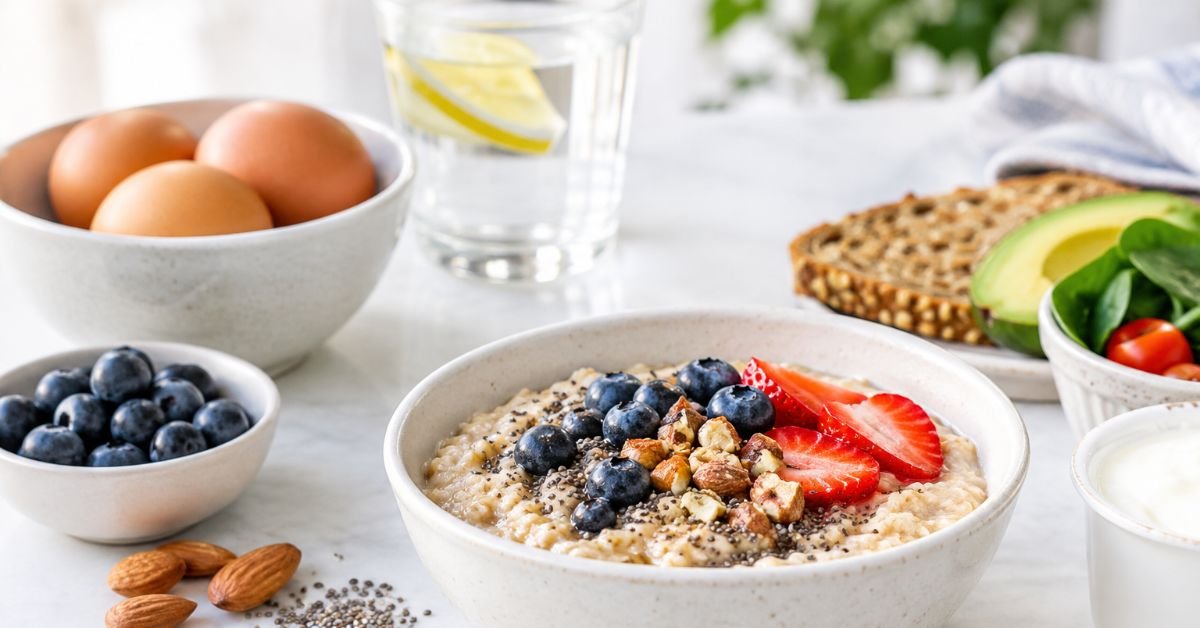

A diabetes-friendly breakfast can include oatmeal, eggs, whole-grain toast, Greek yogurt, fruit, and plenty of other familiar foods. You don’t need to give up carbohydrates or eat the same breakfast every morning. What matters is choosing foods and portions that fit your blood sugar goals, medication, appetite, and daily routine.
The easiest way to plan breakfast is to combine a source of protein with fibre-rich foods, choose carbohydrates thoughtfully, and pay attention to added sugar. These habits can help you build satisfying meals without making breakfast unnecessarily complicated. The American Diabetes Association recommends minimally processed, fibre-rich carbohydrate foods alongside vegetables, fruits, whole grains, and suitable protein sources.
10 Must-Have Diabetic Breakfast Basics for Healthy Mornings
1. Wholegrain Oats
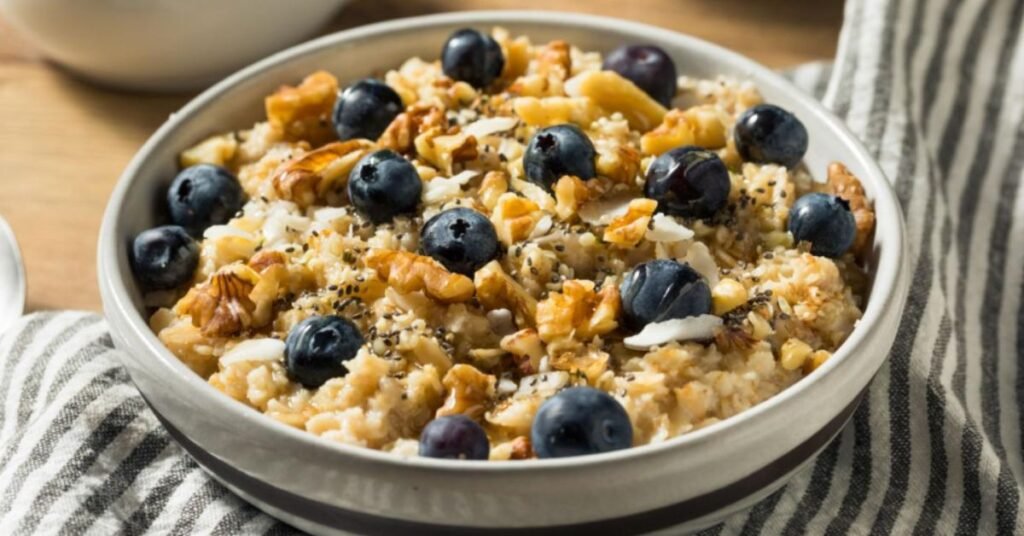
Oats are a useful breakfast staple because they provide carbohydrates, soluble fibre, and a versatile base for different meals. Their beta-glucan fibre can help slow digestion, while the fibre content makes oats a more nutritious option than many highly refined breakfast cereals.
However, oats still contain carbohydrates, so portion size matters when you’re managing blood glucose.
How to make oats more diabetes-friendly:
- Choose plain rolled oats or steel-cut oats without added sugar.
- Cook them with water or unsweetened milk, depending on your preferences.
- Add blueberries, sliced strawberries, or a small portion of chopped apple.
- Include chia seeds, ground flaxseed, or a few walnuts.
- Use cinnamon or vanilla for flavour instead of relying on sugar or syrup.
Instant oats can also work. Check the label because flavoured sachets may contain added sugars, and compare the total carbohydrate content per serving.
A practical breakfast is plain oatmeal topped with blueberries, chia seeds, and a spoonful of unsweetened Greek yogurt.
2. Eggs

Eggs provide protein and several nutrients while containing very little carbohydrate. They’re useful when you want a savoury breakfast that doesn’t depend on cereal, pastries, or sweetened foods.
Boiled, poached, scrambled, and lightly fried eggs can all fit into a diabetes-friendly eating pattern.
Try these combinations:
– Boiled eggs with wholegrain toast.
– Scrambled eggs with spinach and mushrooms.
– An omelette with tomatoes, peppers, and onions.
– Eggs with avocado and a small serving of wholegrain bread.
You don’t have to eliminate egg yolks to manage diabetes. However, overall heart health matters because diabetes can increase cardiovascular risk. Consider your total saturated fat intake, cooking method, cholesterol levels, and individual dietary advice rather than treating any single food as the entire solution.
MUST READ==> 5 Homemade Cereals Suitable for People With Diabetes
3. Plain Greek Yogurt
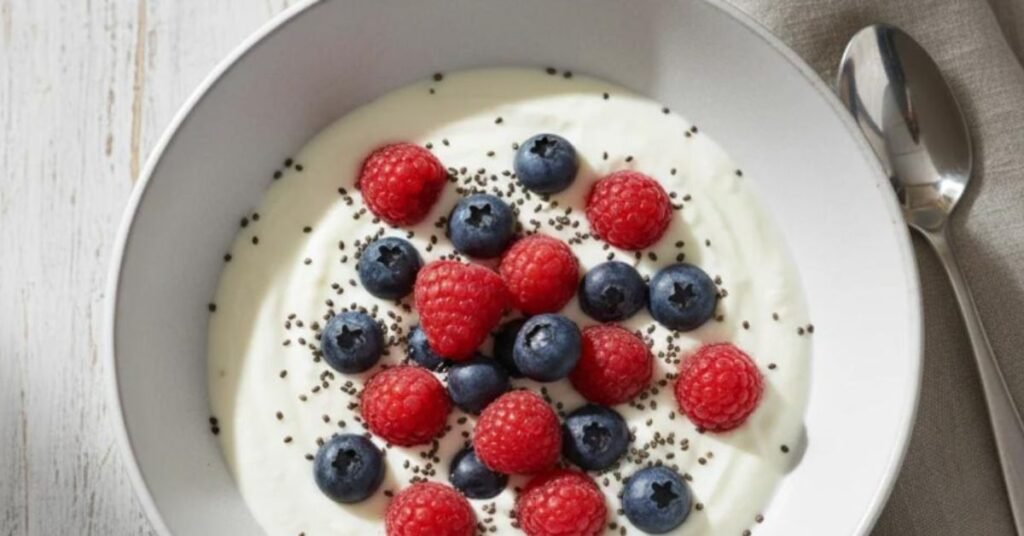
Greek yogurt is a convenient source of protein, and plain varieties often contain less carbohydrate than flavoured alternatives. It works well for people who prefer a quick breakfast that requires little preparation.
When shopping, look for plain, unsweetened Greek yogurt and compare the nutrition labels. Different brands vary in protein, carbohydrate, fat, and added ingredients.
Easy ways to serve it include:
– Greek yogurt with berries and chia seeds.
– Yogurt with a small portion of oats and chopped nuts.
– Yogurt with sliced pear and ground flaxseed.
– Greek yogurt alongside a boiled egg and wholegrain toast.
Be careful with flavoured yogurts, fruit-on-the-bottom varieties, and dessert-style yogurt pots. They can contain substantial amounts of added sugar.
If you avoid dairy, choose an unsweetened alternative with a useful protein content, such as fortified soy yogurt. Many coconut and almond-based alternatives contain considerably less protein, so compare labels.
4. Wholegrain Bread
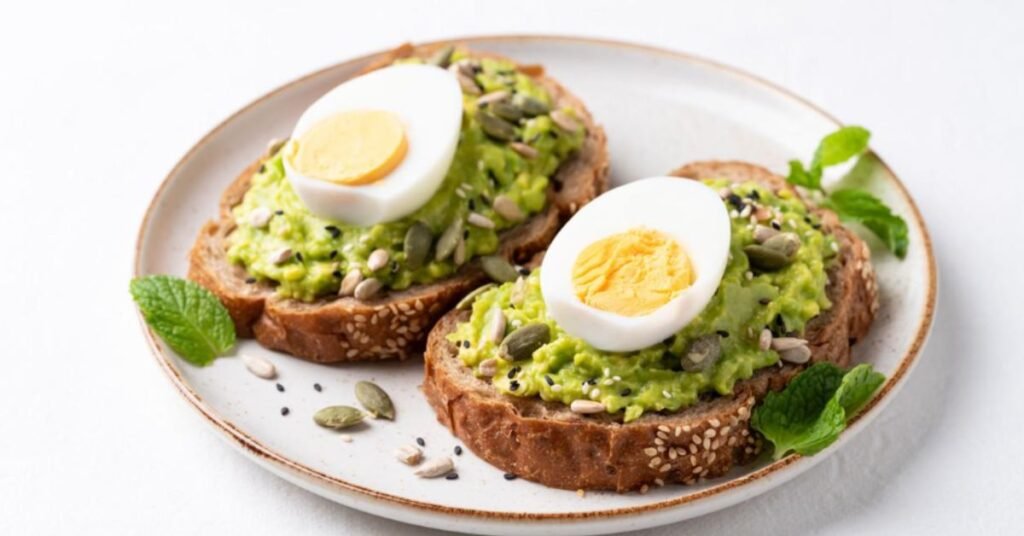
Bread doesn’t have to disappear from your breakfast menu when you have diabetes. Wholegrain bread is often a better everyday choice than white bread because it generally provides more fibre and may be less refined.
Still, wholegrain bread contains carbohydrates, and the amount varies between brands and slice sizes. A thick slice of bread can contain considerably more carbohydrate than a small slice, so check the label rather than relying on the colour of the bread alone.
Try these combinations:
– Wholegrain toast with scrambled eggs.
– Seeded toast with mashed avocado.
– Wholemeal toast with natural peanut butter that has no added sugar.
– Wholegrain toast with cottage cheese and sliced tomatoes.
In the UK, terms such as wholemeal, wholegrain, and seeded can help you identify options to compare. In the US, look for bread labelled 100% whole wheat or another clearly identified whole grain.
Seeded bread isn’t automatically whole grain, and brown bread isn’t always made predominantly from whole grains. Check the ingredients list.
5. Fresh Fruit and Berries

Fruit contains natural sugars, but that doesn’t mean you need to avoid it if you have diabetes. Whole fruit also provides fibre, vitamins, minerals, and water.
Berries are particularly easy to add to breakfast because they work well with oats and yogurt. Apples, pears, oranges, and other whole fruits can also fit into a balanced meal.
Good choices include:
– Strawberries and blueberries with plain yogurt.
– A small apple with unsweetened peanut butter.
– Sliced pear with oatmeal and cinnamon.
– An orange alongside eggs and whole-grain toast.
The main distinction is whole fruit versus juice. Whole fruit generally retains its fibre and takes longer to eat, while juice can deliver a larger amount of carbohydrate in a short time. Diabetes UK recommends choosing whole fruit more often than juice or smoothies.
Fruit portions still count towards your carbohydrate intake. If you use insulin or count carbohydrates, include the fruit in your meal calculation.
Frozen berries without added sugar are another practical option. They’re convenient, can be less expensive than fresh berries, and work well in oatmeal or yogurt.
6. Nuts, Seeds and Natural Nut Butter
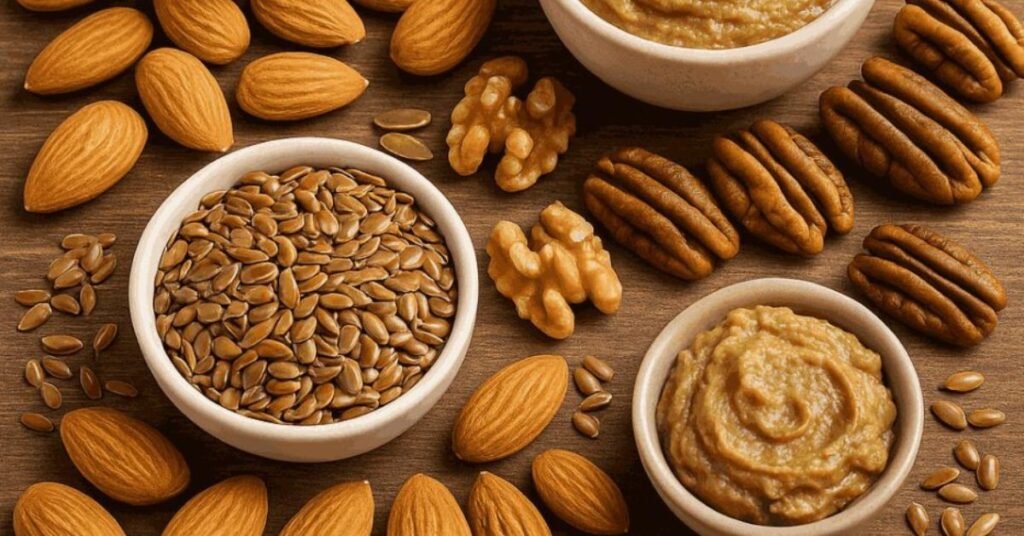
Nuts and seeds provide unsaturated fats, fibre, and varying amounts of protein. They can make a breakfast more satisfying and add texture without requiring much preparation.
Useful options include almonds, walnuts, chia seeds, pumpkin seeds, ground flaxseed, and natural peanut butter.
Try adding a small handful of nuts to oatmeal, sprinkling chia seeds over yogurt, or spreading peanut butter on whole-grain toast.
When buying nut butter, check the ingredient list. Products made primarily from peanuts or other nuts may be preferable to varieties with substantial added sugar, salt, or other ingredients you don’t want.
Portion size matters because nuts and nut butters are energy-dense. You don’t need to avoid them, but a large serving can contribute considerably more energy than you might expect.
Whole nuts and seeds also contain carbohydrates in varying amounts. If you count carbohydrates, use the nutrition information for the product and portion you actually eat.
7. Cottage Cheese

Cottage cheese is a convenient savoury breakfast ingredient that supplies protein and can be paired with vegetables, fruit, or wholegrain foods.
Choose plain cottage cheese and compare labels for protein, carbohydrate, saturated fat, and sodium. Some varieties contain more salt than others.
Here are a few easy combinations:
– Cottage cheese with sliced tomatoes and cucumber.
– Cottage cheese on whole-grain toast.
– Cottage cheese with strawberries or a small portion of chopped pear.
– Cottage cheese alongside boiled eggs and sautéed spinach.
If you’re watching your sodium intake because of high blood pressure or another health concern, lower-sodium options may be worth considering.
Cottage cheese can also be useful when you’re short on time. Serve it straight from the refrigerator with prewashed vegetables or a slice of whole-grain toast, and breakfast is ready in minutes.
8. Vegetables for a Savoury Breakfast

Breakfast doesn’t have to be sweet. Vegetables are an easy way to add fibre, vitamins, minerals, and variety to your first meal of the day.
Spinach, mushrooms, tomatoes, peppers, onions, and courgettes all work well with eggs or tofu. You can also serve vegetables with cottage cheese or add them to a breakfast wrap.
A few practical ideas:
– Scrambled eggs with spinach and mushrooms.
– An omelette with peppers and onions.
– Sautéed tomatoes with eggs and wholegrain toast.
– A breakfast wrap filled with eggs, vegetables, and beans.
Most non-starchy vegetables contain relatively little carbohydrate compared with foods such as bread, potatoes, or cereal. They can help you build a more balanced breakfast without relying entirely on starch-based foods.
Fresh, frozen, and no-added-salt canned vegetables can all be useful. Frozen spinach and mixed peppers are particularly handy when you want to prepare breakfast quickly.
9. Beans and Other Plant-Based Protein Foods

Beans, lentils, tofu, and other plant-based protein foods give you alternatives to eggs and dairy. Beans and lentils also supply fibre, although they contain carbohydrates too.
Depending on your preferences, try:
– Black beans with eggs, tomatoes, and avocado.
– Baked beans with wholegrain toast.
– Tofu scramble with mushrooms and peppers.
– A small serving of lentils with sautéed vegetables.
If you enjoy baked beans, check the label for added sugar and sodium. You can still include them in a diabetes-friendly breakfast; the quantity and the rest of the meal matter.
Plant-based eating doesn’t require eliminating carbohydrates. Instead, choose foods that provide useful nutrients and consider their total carbohydrate content within your individual meal plan. The American Diabetes Association includes legumes, nuts, and seeds among its recommended plant-based protein options.
10. Unsweetened Breakfast Drinks

What you drink with breakfast can affect your overall sugar intake just as much as what you eat.
Water is an excellent everyday choice. Plain tea and coffee can also fit into a diabetes-friendly routine, depending on how you prepare them and your individual tolerance for caffeine.
Consider these options:
– Water, still or sparkling.
– Tea without added sugar.
– Coffee without flavoured syrups.
– Unsweetened milk or a suitable fortified milk alternative, accounting for its carbohydrate content.
Be cautious with sweetened coffees, bottled smoothies, fruit juice, and sugary breakfast drinks. Even drinks marketed as natural or healthy can supply considerable amounts of carbohydrate.
If you enjoy coffee with milk, you don’t necessarily need to remove the milk. Just account for the carbohydrate in your usual serving, particularly if you monitor your intake closely.
The American Diabetes Association recommends water as the primary beverage choice and suggests replacing sugar-sweetened drinks with water or low-calorie alternatives where possible.
How to Build a Balanced Breakfast When You Have Diabetes
You don’t need to buy all 10 foods or combine every food group at every meal. Start with a few staples you enjoy and build a breakfast around them.
A useful approach is to consider three things:
– Protein: eggs, plain Greek yogurt, cottage cheese, tofu, or beans.
– Fibre-rich foods: vegetables, whole fruit, oats, or wholegrain bread.
– Carbohydrate portions: consider the amount of oats, bread, fruit, milk, or other carbohydrate-containing foods in the meal.
Protein and fat can affect how quickly a meal is digested, while the amount and type of carbohydrate influence post-meal blood glucose. Your response will also depend on your medication, activity, and individual physiology.
Five diabetes-friendly breakfast combinations
1. Oatmeal and berries
Plain oats topped with blueberries, a few walnuts, and unsweetened Greek yogurt.
2. Eggs and wholegrain toast
Boiled or scrambled eggs, wholegrain toast, and fresh tomatoes.
3. Yogurt and fruit
Plain Greek yogurt with strawberries, chia seeds, and a small portion of almonds.
4. Vegetable omelette
Eggs cooked with mushrooms, spinach, and peppers, served with wholegrain toast if it suits your meal plan.
5. Beans on wholegrain toast
A portion of baked beans with wholegrain toast and grilled tomatoes. Check the label and account for the carbohydrates in both foods.
These are starting points rather than fixed meal prescriptions. The appropriate portions depend on your appetite, blood glucose targets, medication, and nutritional needs.
Common Breakfast Mistakes to Avoid
A few everyday habits can make it harder to manage your carbohydrate intake.
Choosing cereal based on its health claims alone. Granola, cereal clusters, and flavoured instant oats can contain added sugar. Compare serving sizes, total carbohydrates, fibre, and added sugars before choosing.
Assuming all carbohydrates are bad. Wholegrain bread, oats, beans, milk, and fruit can all fit into a diabetes-friendly eating pattern. Their portions and your individual response matter.
Drinking juice instead of eating whole fruit. Juice can contain substantial carbohydrates without the same fibre structure as whole fruit. Choose whole fruit more often.
Adding lots of sweeteners without checking the label. Honey, brown sugar, maple syrup, and similar sweeteners still contribute sugar. Natural does not automatically mean better for blood glucose.
Making sudden, substantial changes to carbohydrate intake while taking certain diabetes medicines. If you use insulin or medication that can cause low blood glucose, speak with your diabetes care team before making significant dietary changes. Your treatment may need adjustment.
A Simple Way to Start
Keep your breakfast routine manageable. Choose two or three staples from this list, learn which portions work for you, and rotate different combinations throughout the week.
You can enjoy familiar foods while making thoughtful choices about fibre, carbohydrates, protein, and added sugar. If you take medication that can cause low blood glucose, make substantial dietary changes with guidance from your diabetes care team rather than changing your food intake or medication on your own